
PCB Component Missing Detection System Using ESP32-CAM and YOLOv8
Specifications
- Code
- MA2626
- Department
- DKM
- Technology
- ESP32-CAM · YOLOv8
- Theme
- Industrial Automation · AI & Computer Vision
- Student
- Muhamad Muqri bin Sazul Ariffin
- Supervisor
- Shafini bte Abdul Bar
Objectives
To develop a PCB component missing detection system using ESP32-CAM and YOLOv8 for automated PCB inspection. To count the number of rejected PCBs using Arduino Mega 2560 as a controller and display the number on LCD display (16x2). To indicate PCB inspection using LED indicators on the results and inspection status.
Scope of project
Using Telegram as a notification platform for PCB inspection results, including Accept and Reject status. Developing a PCB Component Missing Detection System using ESP32-CAM for image acquisition and YOLOv8 for component detection. Using a (16x2) LCD to display inspection results and the total number of rejected PCBs. Using WiFi from a smartphone hotspot for communication between ESP32-CAM and the processing system with a coverage range 10-30 meters. Using an AC/DC Switching Power Supply (12V, 20A, 240W) to supply power to the system. Using the OV3660 camera module to capture PCB images for missing component inspection. Using LED Pilot Lamp as visual indicators for Accept and Reject inspection results.
Project description
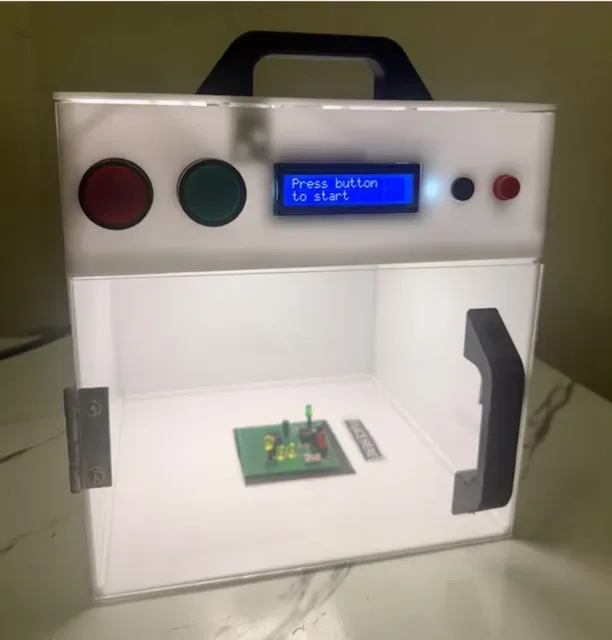
The PCB Component Missing Detection System is an automated quality control solution designed to inspect Printed Circuit Boards (PCBs) for missing components during manufacturing. Utilizing an ESP32-CAM integrated with an OV3660 camera module, the system captures PCB images for component detection processed via Yolov8 or Edge Impulse. An ESP32 serves as the central controller, managing system operations, tracking the total number of rejected PCBs, and updating a 16x2 LCD display. System inspection statuses are indicated using LED Pilot Lamps, while Google Sheet or Telegram acts as the notification and data platform to record inspection results, including Accept and Reject statuses. Wireless communication between the ESP32-CAM and the processing system is established via a smartphone Wi-Fi hotspot with a coverage range of 10–30 meters, and the entire system is powered by an AC/DC Switching Power Supply (12V, 20A, 240W).